
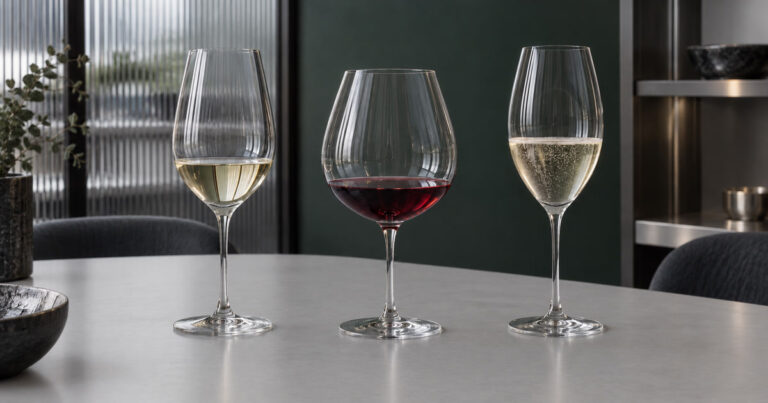
Wine-glass shelves can make wine service look more complicated than it needs to be. There are glasses for particular grape varieties, regions and styles—but does every bottle really require its own shape?
The short answer is no. Glass shape can influence the way aromas reach the nose and the way we experience a wine, but a clean, clear and well-proportioned universal glass will serve most wines very well.
What a good wine glass actually needs
A useful wine glass should give the wine enough room to release its aromas, then guide those aromas towards the nose. That is why the classic tasting shape has a rounded bowl and an opening narrower than its widest point.
The ISO wine-tasting standard describes an elongated egg-shaped bowl with a narrower opening designed to concentrate the bouquet. This does not mean that every home needs laboratory glassware. It simply explains why a gently curved, tulip-like profile is such a reliable starting point.
Four details matter more than a collection of specialised shapes:
- clear, colourless glass, so the wine remains easy to observe;
- a bowl with enough space to swirl without spilling;
- a rim that narrows slightly to retain aromas;
- a clean glass without detergent, cupboard or cloth odours.
One universal glass can cover most still wines
A medium-sized tulip-shaped glass can work for crisp whites, aromatic whites, rosé and many reds. The bowl offers room for air, while the tapered rim keeps the aromas focused. It is also easier to store, replace and use consistently.
The shape does not need to be identical for every occasion. A larger bowl may help an ample white or a structured red open more quickly, while a smaller bowl can help a delicate wine stay focused. These are useful refinements, not rules that should stop anyone from opening a bottle.
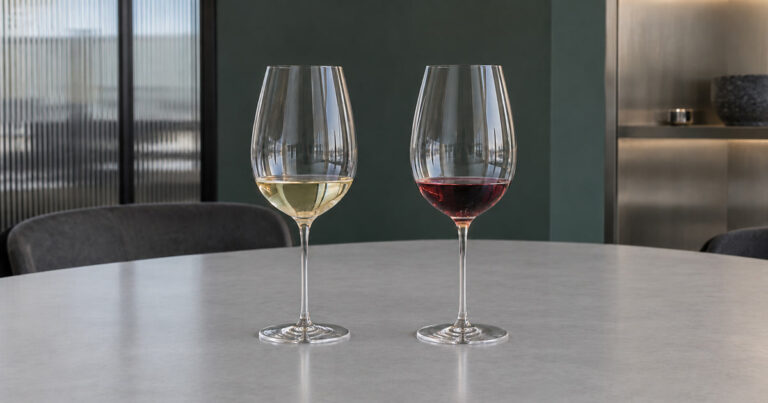
Try the universal glass with: Domaine de la Ville de Colmar Riesling White 2024 and Nicole Lamarche Bourgogne Pinot Noir Red 2022.
For sparkling wine, choose a tulip—not a flute or coupe
The familiar flute is narrow, which can restrict the space available for aromas. A broad, shallow coupe lets bubbles and aromas disperse quickly. The Comité Champagne instead recommends a glass that is tall and bulbous, with an opening that narrows towards the top.
In practice, this means a modern sparkling-wine tulip or a well-proportioned white-wine glass. The rounded bowl gives the bubbles and aromas room to develop; the tapered rim helps retain them. You can still see the fine stream of bubbles without sacrificing the wine’s aromatic expression.
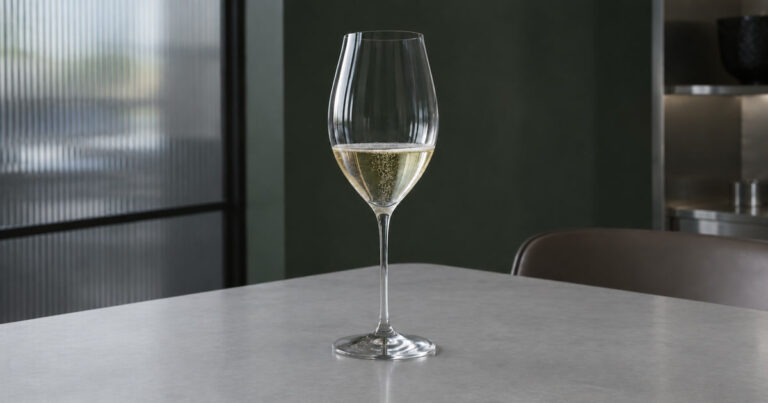
Try the tulip glass with: Anne Gros La Fun en Bulles Crémant de Bourgogne Brut.
At VAVIN, we prefer a smaller pour
Our service guideline is simple: never fill a wine glass beyond 25% of its usable capacity. The empty space is part of the tasting experience. It leaves room to swirl, creates an aromatic headspace and keeps the glass balanced in the hand.
This is especially practical in Taiwan, where wine warms quickly once poured. Serve a smaller amount and refill more often. The wine spends less time warming in the glass, and every pour remains closer to the intended serving temperature.
Three glasses are enough for most homes
A universal tulip glass
The everyday choice for most whites, rosés and reds.
A larger universal glass
Useful, but not essential, for fuller whites and more structured reds.
A tall, bulbous sparkling-wine tulip
The preferred shape for bubbles, with more aromatic space than a flute and better retention than a coupe.
Try the difference for yourself
Pour the same small quantity of one wine into a straight-sided tumbler and a tulip-shaped wine glass. Smell each without swirling, then swirl gently and try again. The point is not to prove that one glass is expensive or prestigious. It is to notice how space, curvature and rim shape change what reaches your nose.
Research and tasting experience suggest that glassware can have both a physical and a psychological influence on perception. The effect is real enough to explore, but not a reason to turn wine service into a rigid ritual.
The simplest rule
Choose a clean, clear glass with a rounded bowl and a slightly tapered rim. Leave generous empty space. Use a tulip-shaped glass for sparkling wine. Most importantly, select a glass that lets you enjoy the wine without worrying about whether it is the only “correct” one.
Availability: References and vintages can change. Check availability with VAVIN before ordering. Drink responsibly. Alcohol is not for anyone under 18.
Editorial sources
- ISO, ISO 3591:1977 — Sensory analysis — Apparatus — Wine-tasting glass, current edition confirmed in 2022.
- WSET, How to taste wines — A guide to tasting wine, 19 December 2023.
- WSET, What is the best glass for Champagne?, 25 October 2022.
- Comité Champagne, In what type of glass should I serve Champagne?, consulted 14 October 2026.
- RIEDEL official product pages for Veritas Riesling / Zinfandel, Veritas Old World Pinot Noir and Veritas Champagne Wine Glass, consulted 14 October 2026.
- VAVIN product pages for the three suggested references; public status and availability checked on 14 October 2026.
 English
 繁體中文
 日本語
 한국어
 Français
 Português
 Español
 Italiano
 ไทย
 Tiếng Việt
