
Cheese and red wine may feel like an automatic match. In practice, the most enjoyable pairing is not decided by colour. Salt, fat, acidity, sweetness, umami and flavour intensity all change how a wine tastes. The same cheese can make one wine feel softer and fruitier, while making another seem harder or more bitter.
That is why sparkling and white wines deserve as much room on the cheeseboard as red. You do not need a complicated chart: start with the style of cheese, then choose a wine with the right freshness, weight and intensity.
The quick guide
| Cheese style | Estilo de vino | Why it works |
|---|---|---|
| Fresh goat or delicate ewe's milk cheese | Lively dry white, such as Sauvignon Blanc or dry Jurançon | Acidity refreshes the palate while aromatic fruit meets the cheese's fresh, tangy character. |
| Brie, Camembert and other bloomy-rind cheeses | Brut sparkling wine or Champagne | Acidity and bubbles lighten the creamy texture; yeasty notes can echo the rind and bread. |
| Comté, Gruyère, Mimolette or mature Cheddar | Rounded white or a fresh, structured Syrah | The wine needs enough flavour for the cheese; salt and fat can soften the red wine's structure. |
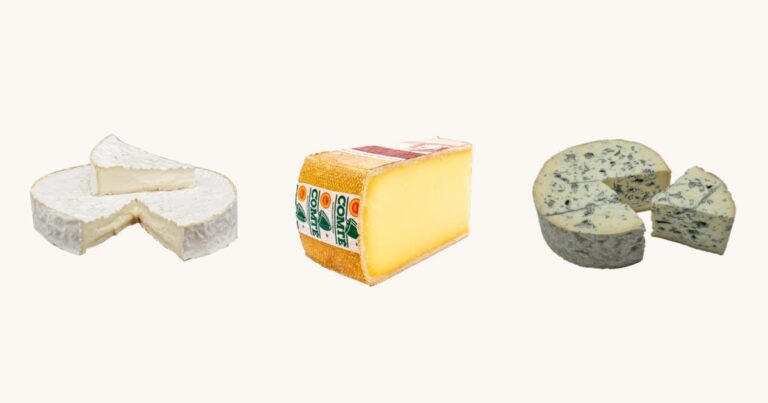
| Blue cheese | Port, Sauternes, Tokaji or another sweet wine | Sweetness balances salt, while both sides have enough intensity to remain expressive. |
1. Soft, bloomy-rind cheese: start with bubbles
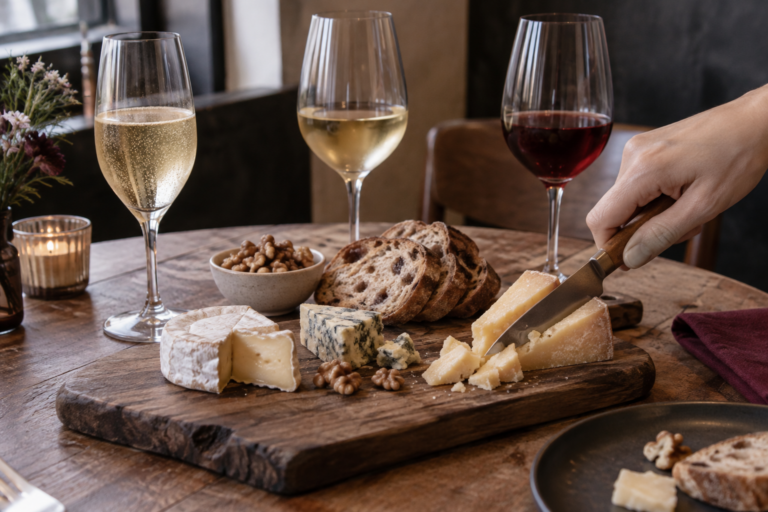
Brie and Camembert combine a creamy centre with an earthy, mushroom-like rind. A heavy, tannic red can sometimes make the rind taste more bitter. A Brut sparkling wine is usually more forgiving: its acidity refreshes the palate, its bubbles lift the creamy texture and its subtle bread-like character connects naturally with the cheese and the bread served beside it.
This is also a useful answer when several mild and medium-strength cheeses share one board. Serve the sparkling wine well chilled, but allow the cheese to lose its refrigerator chill so that its texture and aromas can open.
Try from the VAVIN cellar: Marquis de Pomereuil Champagne Reflet Brut.
2. Goat and ewe's milk cheese: choose a lively dry white
Fresh goat cheese often has a tangy, lactic character. A high-acid dry white—Sauvignon Blanc is the classic example—keeps the combination bright rather than heavy. Albariño and other fresh whites can play the same role.
With a delicate ewe's milk cheese, look for a dry white with a little more texture and aromatic presence. A dry Jurançon made from Gros Manseng is an interesting choice: it can bring freshness, citrus and stone-fruit character without hiding the cheese. As the cheese becomes older and more concentrated, move towards a fuller white or a light, fruit-led red.
Try from the VAVIN cellar: Lionel Osmin Cami Salié Jurançon Sec Dry 2021.
3. Hard and aged cheese: white or red can both work
Comté, Gruyère, Mimolette and mature Cheddar bring firm texture, salt, umami and flavours that can move from fresh milk and nuts towards toast, caramel and spice as the cheese matures.
A younger, gentler cheese is often excellent with a rounded Chardonnay, a structured white from the Rhône or a traditional-method sparkling wine. With a more mature, salty cheese, a fresh, structured Syrah from the Northern Rhône can also work well. The cheese's salt and fat can make the wine feel softer and smoother, but intensity still matters: a delicate wine may disappear beside a very mature cheese.
Try from the VAVIN cellar: Yves Cuilleron Saint-Joseph Les Pierres Sèches 2022.
4. Blue cheese: bring sweetness
Blue cheese is salty, powerful and persistent. A dry wine can taste thin or sharply bitter beside it, especially when the cheese is intense. Port, Sauternes, Tokaji and other sweet wines create contrast: sweetness balances the salt while the wine's concentration keeps pace with the cheese.
The wine should be genuinely sweet, not merely fruity. Pour a small amount and let the cheese remain the centre of the tasting. Walnuts or a little pear can work well, but taste the wine and cheese together before adding preserves, because extra sweetness changes the balance.
Try from the VAVIN cellar: Porto Azul Portugal Ruby.
What about washed-rind and smoked cheeses?
Washed-rind cheeses can be aromatic enough to overwhelm a delicate wine. Try an aromatic white such as Gewurztraminer, or an off-dry Riesling when the cheese is especially pungent. A little fruit and sweetness can be more comfortable than firm tannin.
Smoked cheese, including Scamorza Fumée, can work with a light Pinot Noir, Gamay or a textured white. Keep the wine's oak and alcohol in proportion: the goal is to meet the smoke, not add another layer of heaviness.
The easiest three-cheese board
For a simple tasting at home, choose three contrasting cheeses rather than six similar ones:
- A soft bloomy-rind cheese.
- A firm, nutty cheese such as Comté or Gruyère.
- A blue cheese for the final, most intense taste.
Begin with the mildest cheese and finish with the strongest. Use plain bread or neutral crackers, keep water on the table and taste each pairing before adding honey or fruit preserves.
If you want to open only one bottle, a dry traditional-method sparkling wine is the most flexible starting point. It may not be the perfect partner for a powerful blue, but it will usually behave well with the soft and firm cheeses in the middle of the board.
Ask VAVIN to build your pairing
Tell us which cheeses you enjoy—mild, creamy, nutty, smoky or blue—and how many people you are serving. The VAVIN team can help you choose a sparkling, white, red or sweet wine from the current cellar selection.
Explore VAVIN Gourmet · browse the wine cellar · ask VAVIN on LINE
Pairings are suggestions rather than absolute rules. Product availability can change. Drink responsibly. Do not drink and drive. Alcohol is not for anyone under 18.
 English
  繁體中文
繁體中文  日本語
日本語  한국어
한국어  Français
  Português
  Español
  Italiano
  ไทย
ไทย  Tiếng Việt