
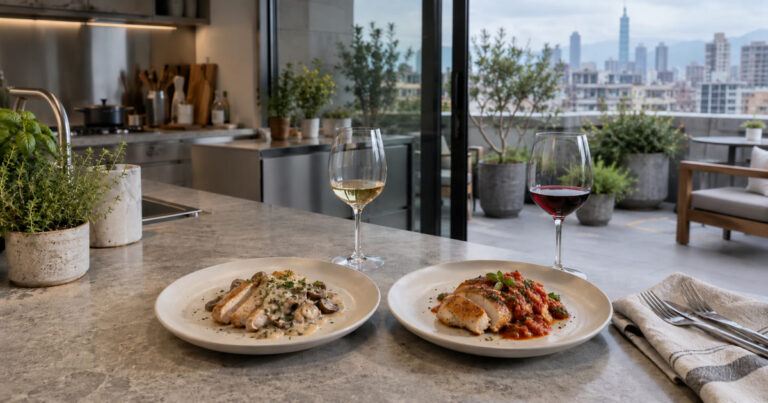
We often choose wine by looking first at the main ingredient: fish, chicken, pork or beef. Yet two plates prepared with the same meat can call for completely different wines. A butter sauce, tomato sauce and chilli sauce do more than change the flavour of the dish—they also change how the wine feels and tastes.
The best question is therefore not always “What am I eating?” but “Which flavour truly dominates the plate?”
Taste the sauce first
Before thinking about grape variety or region, identify the element setting the tone: richness, acidity, umami, heat or sweetness. The wine should then bring freshness, extend the flavour or create a pleasant contrast.
There is no single compulsory pairing. The aim is simply to prevent one element in the sauce from making the wine seem heavy, bitter, hot or stripped of fruit.
1. Creamy or buttery sauce: look for freshness and texture
A cream, butter or cheese sauce coats the palate. A very light white can disappear, while a broader wine with enough freshness can follow the texture without making the combination feel heavy.
Think of a rounded, well-structured Chardonnay supported by lively acidity. It can work with creamy chicken, fish with beurre blanc, mushroom pasta or a mild cheese sauce.
VAVIN bottle: Domaine du Vieux Bourg Clos du Vieux Bourg Beaujolais Blanc 2023.
2. Tomato, lemon or vinegar-based sauce: the wine needs its own balance
The acidity in a sauce can make a wine with little freshness seem softer and less expressive. With tomato sauce, a lemon dressing or a pronounced vinaigrette, choose a wine that also has good acidity.
For a rich tomato sauce simmered with herbs, olives, roasted vegetables or meat, a Mediterranean red can bring greater depth. Château de Ciffre’s Saint-Chinian combines concentrated fruit, silky tannins and enough freshness to support this style of sauce. It suits an intense tomato preparation better than a delicate vinaigrette.
VAVIN bottle: Château de Ciffre Saint Chinian Grand Vin Red 2019.
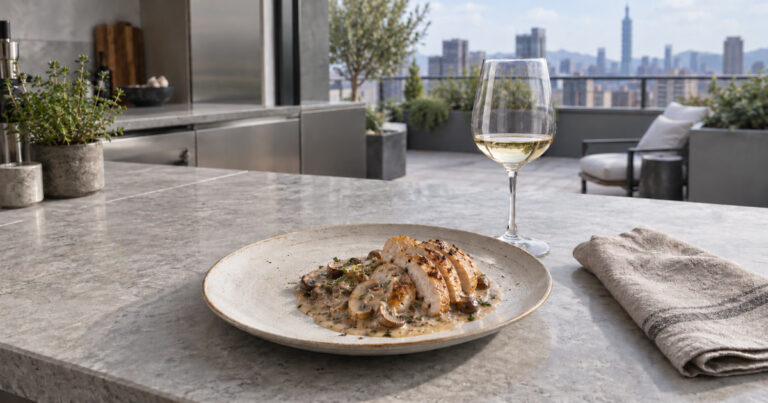
3. Soy, miso, mushroom or reduced jus: be careful with tannins
Umami-rich flavours can make some red wines seem drier, more bitter and less fruity. Concentrated soy sauce, a miso glaze, mushrooms or a reduced meat jus do not necessarily call for the most powerful wine.
A juicy, low-tannin red with good acidity is often more harmonious. Fleurie is especially versatile here: its fruit remains present and its structure does not unnecessarily harden the pairing.
VAVIN bottle: Château de la Chaize Fleurie 2020.
4. Chilli or sweet-and-sour sauce: a little sweetness can help
Chilli intensifies the sensation of alcohol. A powerful, warming red can therefore make the dish feel even hotter. A fresh wine with a touch of sweetness can soften the heat without erasing the spices.
With spicy chicken, sweet-and-sour sauce, a honey-and-chilli glaze or spicy prawns, try a demi-sec wine served well chilled. Bubbles add a welcome sense of lightness.
VAVIN bottle: Marquis de Pomereuil Champagne Reflet Mielle Demi-Sec.
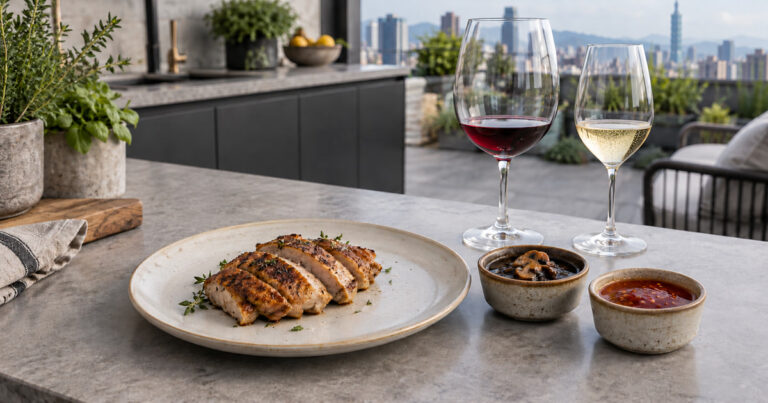
One dish can therefore call for several wines
Take a simple roast chicken:
- with a cream and mushroom sauce, choose a broad, fresh white;
- with tomato and herb sauce, move to a supple, lively red;
- with a slightly sweet, spicy soy sauce, prefer an aromatic white or demi-sec sparkling wine.
The meat has not changed. The sauce has completely redrawn the pairing.
The VAVIN method in four questions
Which flavour dominates: richness, acidity, umami, heat or sweetness?
Is the sauce more delicate or more intense than the main ingredient?
Does the wine have enough freshness to keep the pairing balanced?
Should the pairing seek harmony or a refreshing contrast?
In Taiwan, serving temperature is especially important. Wine warms quickly in the glass: serve whites, sparkling wines and light reds slightly cooler than their intended final temperature, without making them icy.
The simplest rule
Taste the sauce first, then the wine. If the wine becomes bitter or hot, or loses its fruit, change styles rather than forcing the pairing. The best pairings do not follow a rigid formula: they preserve the balance of the plate and make you want to return to it.
Availability: References and vintages can change. Check availability with VAVIN before ordering. Drink responsibly. Alcohol is not for anyone under 18.
Editorial sources
- WSET, Specification – Level 2 Award in Wines, principal food-and-wine interactions.
- WSET, How to pair drinks with spice, 24 March 2026.
- WSET, How to pair wine with your favourite takeaway meals, 2 June 2020.
- VAVIN product pages for the four suggested references; public status and availability checked on 12 October 2026.
 English
 繁體中文
 日本語
 한국어
 Français
 Português
 Español
 Italiano
 ไทย
 Tiếng Việt
